- Why your mind is your biggest trading tool
- The emotion cycle every trader lives through
- Why most traders lose money (hint: not strategy)
- The loss aversion trap
- Herd behaviour — why you follow the crowd
- FOMO and panic — the twin killers
- How to train your mind like a professional
- Seven rules for emotional discipline
- Frequently asked questions
Why your mind is your biggest trading tool
Here is a hard truth. Most traders do not lose money because their strategy is bad. They lose money because they cannot follow their own strategy.
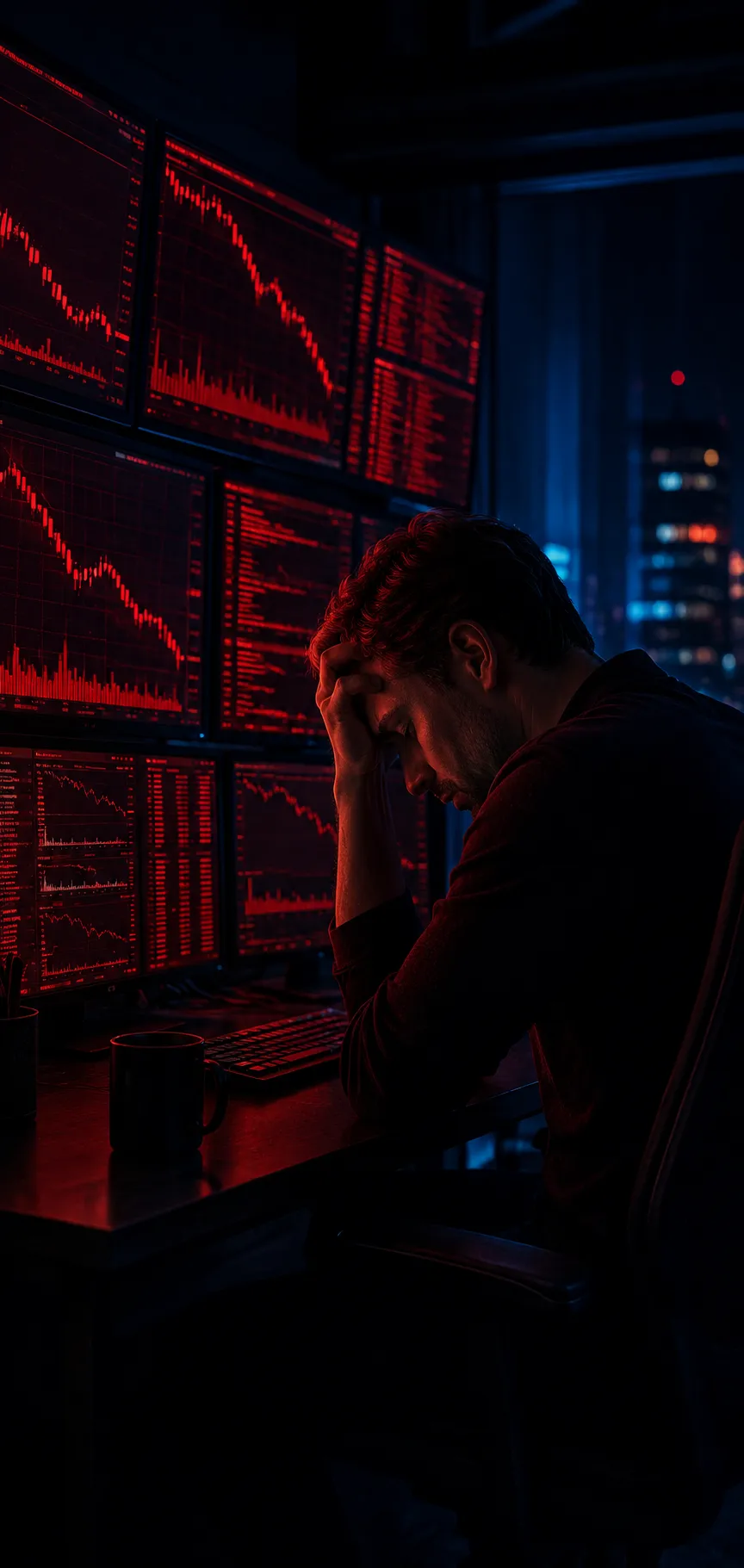
You read a book. You learn a good strategy. You plan to enter at price X and exit at price Y. Then the market opens. You see red candles everywhere. Your heart beats fast. You sell at price Z — much worse than Y. You broke your own rule.
This has happened to every trader alive. It will happen to you. The question is not how to avoid emotions. You cannot. The question is how to act smartly despite emotions.
This is what trading psychology means. It is the study of how human emotions affect trading decisions — and how to control those emotions. It is the most important skill in trading. More important than charting. More important than technical indicators. More important than finding the perfect coin.
In my five years of trading, I have seen many people with strong technical knowledge blow up their accounts. And I have seen people with simple strategies make steady profits because their mind was in the right place. The difference was always psychology.
The good news is this. Psychology can be trained. Just like you go to the gym to build physical muscles, you can do daily exercises to build emotional muscles. This guide shows you how. Read it fully. Go back to it when you feel shaky. The lessons here are the ones I wish someone had forced me to learn on Day 1.
The emotion cycle every trader lives through
Before we talk about controlling emotions, we need to name them. Every trader goes through the same emotional rollercoaster in every market cycle. Once you can see the pattern, you can stop repeating it.
The full emotion cycle — euphoria at the top, capitulation at the bottom, and back again.
Here is the full cycle, from bottom to top and back again:
1. Disbelief. Prices start rising after a long downtrend. You think "this is fake, it will fall again". You do not buy.
2. Hope. Prices keep rising. You start wondering if it is real. You buy a small amount.
3. Optimism. Prices rise more. Your small buy is now in profit. You feel smart.
4. Belief. You commit more money. You feel confident. Friends ask your advice.
5. Thrill. The market is exploding higher. You buy again at higher prices. Social media is celebrating.
6. Euphoria. Everyone is rich on paper. You borrow money or use leverage to buy more. You cannot imagine prices ever falling. This is the top.
7. Complacency. Prices stop going up. You tell yourself it is just a pause. You do not sell.
8. Anxiety. Prices drop 10%. You are worried but you still believe.
9. Denial. Prices drop 25%. You tell yourself this is just a healthy correction.
10. Fear. Prices drop 40%. You stop checking your portfolio.
11. Desperation. Prices drop 55%. You realise you are in trouble.
12. Panic. Prices drop 65%. You want out.
13. Capitulation. Prices drop 75-85%. You sell everything to stop the pain. This is the bottom.
14. Depression. You blame yourself. You promise never to trade again.
15. Disbelief. Prices start rising again. You think it is a trick. The cycle repeats.
Look at this list carefully. Notice that the best time to sell is Euphoria. The best time to buy is Capitulation. But those are exactly the moments when feelings say the opposite. That is the trap. Your feelings are always late. By the time you feel euphoric, it is too late to buy. By the time you feel hopeless, it is too late to sell.
Why most traders lose money (hint: not strategy)
Here is a simple experiment. Take any trading strategy from a book. Test it on ten years of historical data. You will find that even simple strategies make decent profits — if you follow them perfectly.
Now give the same strategy to 100 real traders. After one year, 70-90 of them will have lost money. Same strategy. Same market. Different results.
Why? Because humans cannot follow the rules perfectly. When a losing trade hits the stop-loss, instead of exiting as planned, they move the stop-loss further. When a winning trade hits the profit target, instead of exiting, they hold "for more". When the market is calm, they overtrade out of boredom. When the market is crashing, they panic-sell at the worst moment.
Here are the most common emotional mistakes that destroy accounts:
- Refusing to accept a loss. A small loss that was planned becomes a big loss because you kept hoping it would recover.
- Cutting winners too early. A profit of 10% feels "safe". You sell. Then the coin goes up another 50% without you.
- Revenge trading. You lose a trade. To "get the money back", you immediately place another bigger trade. You lose that too.
- Overtrading. The market is quiet. You feel bored and take random small trades. Small losses add up.
- Averaging down into a losing trade. The coin is falling. You buy more to "lower your average price". The coin keeps falling. Now you have lost twice as much.
- Using leverage from fear of missing out. You see a friend make money on a leveraged trade. You try it. You get liquidated. Read why in our leverage trading guide.
All six of these mistakes are emotional, not technical. None of them requires advanced knowledge to avoid. They just require discipline. And discipline is something you can build, if you work on it.
The loss aversion trap
Here is a fact from psychology research. Losing ₹1,000 hurts twice as much as gaining ₹1,000 feels good.
The loss aversion rule — humans feel losses about twice as intensely as equivalent gains.
This is called loss aversion. It is hardwired into your brain. You cannot turn it off. But you can understand it and plan around it.
Loss aversion explains several trading behaviours that seem crazy from outside:
1. Holding losing trades too long. If you sell at a loss, you feel pain immediately. If you keep holding, you avoid the pain for now. Your brain prefers "later pain" over "now pain", even if later pain is bigger. So you hold. And hold. And hold.
2. Selling winning trades too early. A winning trade is an open gain. Your brain worries that gain could disappear. Selling early locks in the gain. The pain of "missing more upside" feels smaller than the pain of "losing my paper profit". So you sell at 5% when your plan said 20%.
3. Skipping good trades after a loss. You just lost a trade. Your brain is in pain. A new setup appears that matches your rules perfectly. But your brain says "no, I cannot handle another loss right now". You skip it. It turns out to be a big winner. Your discipline was broken not by greed, but by fear.
The way to beat loss aversion is not to fight it. It is to plan in advance. Before you enter any trade, you write down your exit rules. You set your stop-loss as an actual exchange order, not a number in your head. You commit to your profit target before the trade even starts. Then, when emotions arrive, your hands are already tied. The plan you made with a clear mind controls the decisions your emotional mind would otherwise ruin.
Herd behaviour — why you follow the crowd
Humans are social animals. For most of our history, following the crowd was the safest strategy. If everyone in your village ran away from the river, there was probably a crocodile. You ran too. You did not stop to investigate.
The four stages of herd behaviour — and why the best entry is usually in stage 1, not stage 3.
This same instinct is still in your brain today. But in the crypto market, the "crowd" is often wrong at the extremes. When everyone is buying Bitcoin at the top, you should be selling. When everyone is selling at the bottom, you should be buying.
Here is how herd behaviour plays out in four stages:
Stage 1 — Early signal. The price quietly starts moving. Only a few traders notice. There is no news coverage. No social media excitement. This is when smart money buys.
Stage 2 — Crowd joins. The price has moved enough that news sites pick it up. Influencers start talking. Friends mention it. You hear about it. You feel FOMO (fear of missing out).
Stage 3 — Euphoria peak. Everyone is in. Your barber is buying. Taxi drivers are giving tips. News coverage is non-stop. This is the top. Smart money is now selling to the crowd.
Stage 4 — Crowd exits. The price starts falling. Panic spreads. Everyone sells. Prices crash. Smart money is now buying again, at low prices from panicked sellers.
To escape herd behaviour, you need to ask yourself one question before every trade: "Am I buying because I think this is a good setup, or because everyone else is buying?" If the answer is "everyone else", you are at risk of being the last buyer at the top.
A simple rule that has saved me many times: When the news about a coin is everywhere, it is usually too late to buy. The best opportunities come from boring, quiet, overlooked moments — not from explosive headline moments. This is also how large players manipulate retail traders. Our whale manipulation guide explains exactly how they use crowd psychology against you.
FOMO and panic — the twin killers
Two emotions kill more trading accounts than all other emotions combined. FOMO and panic. They are twin brothers. Both make you act fast. Both make you act without thinking.
FOMO stands for "fear of missing out". It hits when you see prices going up without you. Your friends are making money. Twitter is celebrating. You feel stupid for not buying. So you rush in — usually at the worst price. Within days, the price falls and your buy is in loss.
How to beat FOMO:
- Rule of 24 hours. If you feel sudden urgency to buy something, wait 24 hours. If after 24 hours, you still want to buy and the setup is still valid, then buy. 90% of FOMO urges disappear within a day.
- Check the Fear and Greed Index. If it is in Extreme Greed, your FOMO is definitely not unique. The whole market is feeling it. That is a warning, not a green light. See our Fear and Greed Index guide.
- Remember the last FOMO buy. Keep a note of your last 3 FOMO buys and what happened. Read this note before every new FOMO urge. The pattern will teach you.
Panic is the opposite. It hits when prices are falling fast. You watch your money disappear. Every candle is red. Your brain screams "SELL!". So you sell — usually at the worst possible price. Within days or weeks, the price recovers and you missed it.
How to beat panic:
- Set stop-losses in advance. A pre-set stop-loss is an exit decision made with a clear mind. When panic hits, the decision is already made. You do not have to think.
- Close the app. Yes, literally. If you feel panic, close your exchange app and go for a walk. You cannot do anything productive in that state. Decisions made in panic are almost always wrong.
- Remember the purpose of your position. If you bought Bitcoin as a 5-year investment using dollar-cost averaging, a 40% temporary drop does not change your plan. Do not confuse a long-term strategy with a short-term emotion.
How to train your mind like a professional
Professional traders are not emotionless robots. They feel fear and greed just like you. The difference is they have trained their response. Here is how they do it, and how you can too.
Practice 1 — Keep a trading journal. Write down every trade: why you entered, why you exited, and how you felt. Over time you will see your own emotional patterns. "I always panic-sell on Monday mornings". "I always FOMO-buy after seeing a green candle on social media". Once you see the pattern, you can fix it. Without the journal, you will repeat the same mistakes forever.
Practice 2 — Start with small size. When you are new, trade with very small amounts that feel unimportant to you. Maybe ₹2,000 or ₹5,000 per trade. Yes, even smaller if needed. The goal for your first 50 trades is not profit. It is emotional training. You need to experience wins and losses without the emotions being overwhelming. Only after 50-100 trades should you increase size.
Practice 3 — Pre-commit to your exits. Before entering a trade, write down your stop-loss price and your profit target. Better yet, set them as actual exchange orders. This removes the decision from your future emotional self. Your calm present self makes a better choice.
Practice 4 — Schedule your screen time. Decide in advance when you will check the market. Maybe 7 PM for 30 minutes. Do not check outside those times. Unscheduled checks create unscheduled emotions, which create unscheduled bad decisions.
Practice 5 — Step away after a loss. After any losing trade, take a mandatory break of 2 hours. No exceptions. This breaks the revenge-trading loop before it starts.
Practice 6 — Meditation or breathing. Yes, really. Two minutes of slow breathing before making any big decision lowers your heart rate and activates the thinking part of your brain instead of the panic part. Even professional traders use this trick.
Practice 7 — Accept that losses are normal. Even the best traders lose 40-50% of their individual trades. Profit comes from winning trades being bigger than losing trades, not from avoiding losses. Once you accept losses as a normal business cost, they stop feeling like personal failures.
Seven rules for emotional discipline
Print these seven rules. Stick them above your screen. Read them before every trading session. Violating them costs money — always.
Rule 1 — Never trade without a stop-loss. A stop-loss is an exit plan. No plan = no trade. Period.
Rule 2 — Never risk more than 2% of your account on one trade. Survival first, profit second. With 2% risk, you can survive 10 losses in a row. With 10% risk, you are one bad week from zero.
Rule 3 — Never trade on tips from WhatsApp, Telegram, or influencers. If a trade idea is spreading everywhere, you are the last buyer. Use your own analysis.
Rule 4 — Never add to a losing position to "average down". Adding to losers means the market is proving you wrong and you are fighting it. Cut the loss and walk away.
Rule 5 — Never trade in anger or excitement. Any strong emotion disqualifies you from trading that day. Come back when calm.
Rule 6 — Always journal every trade. The pattern of your mistakes is the map to your improvement.
Rule 7 — Always have a plan before you enter. Entry price, stop-loss, profit target. Three numbers. Write them before you click "buy".
KAVACH — Discipline framework for emotional traders
KAVACH is built around the exact psychological mistakes that destroy retail traders — position sizing rules, daily loss limits, stop-loss discipline, and the recovery protocol for after a loss streak. If your strategy is good but your discipline is weak, KAVACH is the missing piece.
Explore the Store →Trading psychology is the slowest skill to build and the most valuable. It takes years, not months. Every loss is a lesson. Every panic is a training session. Every FOMO urge is a chance to practice patience. The person you are at the start of your trading journey will not be the person you are after 500 trades — if you do the work.
To practice this daily with a community that understands, join our Telegram group. For a structured learning path, our trading courses include a full psychology module. Trade small. Journal always. Take the long view. Your biggest enemy is not the market — it is the voice in your own head.
Frequently asked questions
Why do most traders lose money even with good strategies?
Because trading requires you to follow rules under emotional pressure. A good strategy exists only on paper. In real markets, fear and greed make you break your rules — you move stop-losses, hold losers, cut winners early, and revenge-trade. The fix is not a better strategy but stronger emotional discipline, built through journaling, small position sizes, and pre-set exits.
How can I control fear and panic while trading crypto?
Three steps. First, always set a stop-loss as an exchange order before entering any trade — this removes the decision from your panicked future self. Second, avoid checking charts during volatile moves; go for a walk or close the app. Third, start with very small positions (₹2,000-₹5,000) until your emotional response calms. Discipline is trained, not born.
What is FOMO and how does it affect crypto traders?
FOMO means 'fear of missing out'. It hits when you see prices rising rapidly while you are not in the trade. It pushes you to buy at high prices, usually right before a correction. The best defence is the 24-hour rule — if you feel urgent need to buy, wait a full day. Most FOMO urges disappear within 24 hours, saving you from bad entries.
How long does it take to master trading psychology?
Realistically, 2-3 years of consistent practice with daily journaling. The technical side of trading can be learned in months. The emotional side takes much longer because it requires experiencing many wins and losses in real money before the lessons stick. There is no shortcut — only consistent small-size practice and honest self-review.
Is trading psychology more important than technical analysis?
Yes, significantly. Technical analysis tells you what trades to take. Psychology determines whether you can actually execute them without sabotaging yourself. A simple strategy with strong discipline beats a complex strategy with weak discipline every time. New traders should spend at least 30% of their learning time on psychology, not just charts.
cRyPtO sMaRt is not registered with SEBI and does not provide investment advice. Crypto trading carries significant risk of capital loss. The strategies, examples, and opinions shared in this article are for educational purposes only. Always do your own research and consult a SEBI-registered financial advisor before investing real capital. Past performance does not guarantee future results.